Biohazard Cleanup
Safe, careful removal of bodily fluids and other infectious material, finished with hospital-grade disinfection.
Learn more →Texas · Denton County
Need biohazard cleanup in Sanger, TX? Call (877) 812-4220 any hour and get local biohazard cleaners for crime scene cleanup, unattended death cleanup, trauma scene cleanup, blood and bodily fluid cleanup, hoarding cleanup and sewage cleanup across Denton County.
If anyone is in danger, call 911 first. For a suicide crisis, call or text 988.
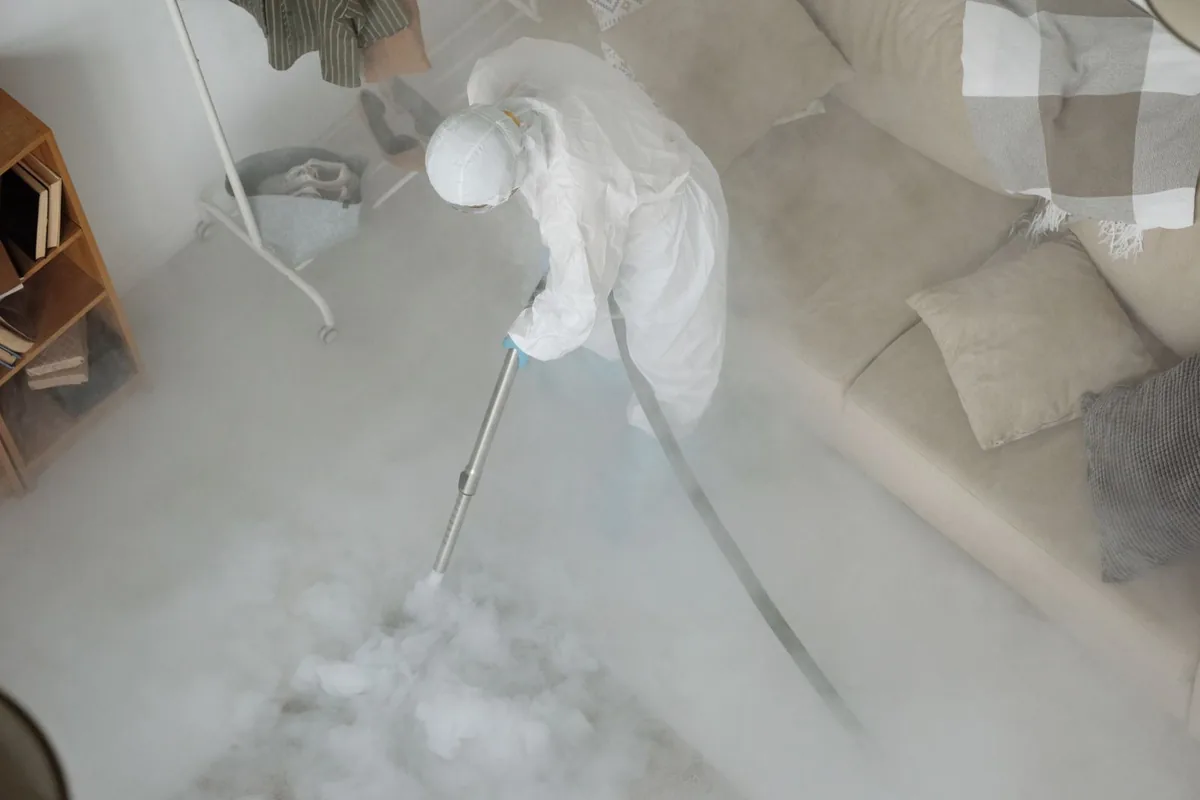
After police, paramedics and the medical examiner or justice of the peace finish, the property still has to be cleaned. In Sanger, you can get biohazard cleanup services for homes, rentals and commercial buildings, starting with a call to Sanger Biohazard Cleanup Help.
Discretion is part of the work. Vehicles are unmarked, the crew keeps its voice down and nothing about the job is shared with neighbors. Coverage includes Sanger, Denton and the surrounding area of Denton County.
Only about 12% of homes in Denton County were built before 1980, so most cleanups involve newer drywall and flooring, though fluids can still soak through to the subfloor. About 26% of homes in Sanger are rented, so many cleanups involve owners working directly with their own homeowners insurance company.

Decontamination starts with protecting people. Crews suit up in PPE, set up barriers so contaminants cannot drift into clean rooms, and work to OSHA bloodborne pathogen protocols (29 CFR 1910.1030) from the first step to the last.
Sealing, cleaning, disinfecting and ventilating work together. Plastic barriers and HEPA air scrubbers hold contaminants in place, EPA-registered disinfectants do the germ kill, and hydroxyl or ozone treatment clears the odor that is left.
Below are the cleanup services you can get in Sanger, grouped by what happened: death and trauma, waste and hoarding, disease and drugs, and property cleanouts.
Safe, careful removal of bodily fluids and other infectious material, finished with hospital-grade disinfection.
Learn more →Crime scene cleaners handle contaminated carpet, drywall and debris, then check the work before handing the space back.
Learn more →Trauma and crime scene cleanup for homes, workplaces and vehicles, handled privately with protective gear.
Learn more →Decomposition cleanup that treats the room, the air and the odor at its source.
Learn more →Respectful biohazard cleanup that removes affected materials and treats odor so families do not have to.
Learn more →Respectful homicide cleaning that removes blood, bodily fluids and odor after investigators release the scene.
Learn more →Blood clean up service with protective gear, EPA-registered disinfectants and sealed disposal of contaminated waste.
Learn more →Soaked carpet, mattresses and furniture removed, and affected surfaces sanitized after a fluid release.
Learn more →Urine and feces cleanup that removes soaked carpet, mattresses and furniture and sanitizes the affected area.
Learn more →Removes soaked materials, disinfects and neutralizes odor in homes, rentals and vehicles.
Learn more →Hauling, disinfecting and odor removal for crowded homes, without judgment or pressure.
Learn more →Trash, donation and recycling hauled out of crowded homes, followed by a thorough clean.
Learn more →Animal hoarding cleanup with protective gear, soaked flooring removal and thorough sanitizing.
Learn more →Hoarding and filth cleaning that restores a home for living, repairs or a new tenant.
Learn more →Category 3 cleanup with protective gear, sealed disposal and EPA-registered disinfectants.
Learn more →Biohazard decontamination after outbreaks, with protective gear, set order of work and sealed disposal of waste.
Learn more →Biohazard remediation that removes soaked materials, treats odor and documents each step of the work.
Learn more →Medical waste removal: sharps, soaked dressings and clinical waste packed, sealed and hauled away.
Learn more →Safe syringe pickup for places where children, pets or customers could be at risk.
Learn more →Cleanup after police release: items, residue and soiled materials handled without judgment.
Learn more →Clear steps for owners who suspect meth contamination, from first sample to final report.
Learn more →Fentanyl decontamination: powder and residue contained, collected and cleaned from homes, vehicles and workplaces.
Learn more →Safe removal of solvents, fuels, pesticides, mercury and unlabeled containers from homes and businesses.
Learn more →Hazmat cleaning for pavement, soil, buildings and equipment, with protective gear and lawful waste disposal.
Learn more →Tear gas cleanup for homes, shops and vehicles, with testing, containment and a final check.
Learn more →Droppings cleanup in kitchens, garages, ductwork and storage rooms with protective gear and sealed disposal.
Learn more →Removal of insulation soaked with guano, plus odor treatment and sanitizing of the structure.
Learn more →Carcass cleanup of fluids and soaked insulation, carpet and drywall that cannot be saved.
Learn more →Vehicle biohazard cleanup for cars, trucks, vans and buses, with soaked upholstery removed and odor treated.
Learn more →Blood and body fluids removed and disinfected after falls, cuts, crashes and workplace injuries.
Learn more →Biohazard cleaning for commercial and industrial sites, from restrooms and break rooms to warehouse floors.
Learn more →Estate cleanup that empties, cleans and hands back a home ready for its next step.
Learn more →A technician looks for every source of contamination, including areas the eye misses, such as under flooring and inside vents. The type of biohazard sets the method.
The crew takes photos and notes of the affected areas and the work done. Homeowners insurance companies, landlords and compensation programs often ask for these records.
Soaked carpet, padding, upholstery and drywall are cut out and bagged. Hard surfaces, tools and fixtures are cleaned and disinfected in place.
Odor equipment finishes the air, the crew checks the whole area, and the owner is told what was done and what repairs may still be needed.
Local help in Sanger, Denton and nearby towns means crews know the area, local police and the way homes in the region are built.
Cleanup covers houses, apartments, rentals, offices, churches, shops and cars or trucks, with plans that fit each type of property.
A final inspection, with odor and surface checks where they help, confirms the area is safe before the cleanup is called complete.
Death odor and sewage smell are treated with air scrubbers and hydroxyl or ozone equipment, not masked with sprays that fade.
Biohazard cleanup in Sanger, TX typically costs $500 to $25,000, depending on the type of biohazard, the size of the affected area and how far fluids soaked into porous materials.
Most residential jobs cost $3,000 to $5,000 (Fixr). Insurance changes who pays but not how the work is done. Homeowners and renters policies often respond to sudden events such as a death, a crime or an accident, and you get the photos and notes an adjuster asks for.
| Type of job | Typical range |
|---|---|
| Blood spill cleanup, small area | $500 - $2,500 |
| Crime scene cleanup, most homes | $1,500 - $7,500 |
| Unattended death cleanup | $2,000 - $7,000 |
| Suicide cleanup | $1,500 - $5,500 |
| Sewage cleanup, most homes | $2,000 - $10,000 |
| Hoarding cleanup, level 3 home | $2,000 - $5,000 |
| Meth lab cleanup, typical | $15,000 - $20,000 |
Estimates only, not a quote. Sources: Fixr, Yelp Costs, BioCleaners Directory, PushLeads, Dropcurb, Bob Vila and cleanup company cost guides. Call (877) 812-4220 to talk through the job.
After the Denton County Sheriff's Office or local police release a scene, blood, bodily fluids and fingerprint powder remain. Law enforcement does not clean; the property owner calls crime scene cleaners.
With a vacancy rate of 4% in Denton County, empty buildings can collect animal waste, drug paraphernalia and storm damage that nobody sees until later.
Hoarder homes can hide rotting food, animal waste, mold and pests, along with fire and structural hazards. Hoarding cleanup sorts belongings and restores a livable condition.
Families should never have to clean up after a suicide. Discreet suicide cleanup removes all traces with care and respect. Crisis support is available any time at 988.
Homes, churches and businesses may need infectious disease disinfection, needle and sharps cleanup, or meth lab and fentanyl decontamination after a property is released.
Attics, barns and sheds can hold droppings, guano and carcasses that carry disease. Careful removal and disinfection protect the people who go back in.
The word biohazard covers blood, tissue, decomposition, sharps, waste and some residues. Each carries different health risks, and each calls for its own cleaning and disposal approach.
It varies by the germ. Hepatitis B can survive on surfaces for at least seven days, and other pathogens last for different periods. Because nobody can tell by looking, all blood is treated as infectious until it has been properly disinfected.
A biohazard is any biological material that can carry germs and make people sick. Common examples are blood, bodily fluids, tissue, sewage, used needles, animal waste and the fluids from decomposition. Anything that has touched them can also become contaminated.
Cleanup can begin once the police, and a justice of the peace or medical examiner where one is involved, release the scene. Ask them directly when that happens. The cleanup team waits for that release before touching anything.
Usually the property owner's insurance pays first. After a violent crime, the Texas Crime Victims' Compensation Program, run by the Office of the Attorney General, can pay up to $2,250 for crime scene cleanup. Otherwise the owner, landlord or estate pays.
Symptoms such as stomach pain, vomiting and diarrhea can begin within a few hours to a few days after contact with raw sewage, depending on the germ. Sewage is a Category 3 biohazard, so it should be cleaned by a crew wearing protective gear, and anyone with symptoms should see a doctor.
Regular cleaning removes dirt. Biohazard cleanup removes infectious material and reaches under and behind surfaces, using PPE, containment, EPA-registered disinfectants and regulated waste disposal. It follows safety rules that ordinary cleaning does not.
It can. Denton County has a Relatively High river flood risk rating from FEMA. Wherever floodwater or a sewer backup enters a home, the water is treated as Category 3 and needs full cleaning and disinfection.
The Denton County Health Department is a local contact for public health questions in Denton County. A cleanup crew does the disinfection and disposal, while a doctor or health department can advise on any exposure or illness.
Nearby towns such as Krum and Road Runner are part of the Sanger service area. Property owners in Denton County can call (877) 812-4220 for biohazard removal at any hour.
Ask about the steps, the cost range and insurance before anything starts.
Call (877) 812-4220